Friday, March 13, 2026
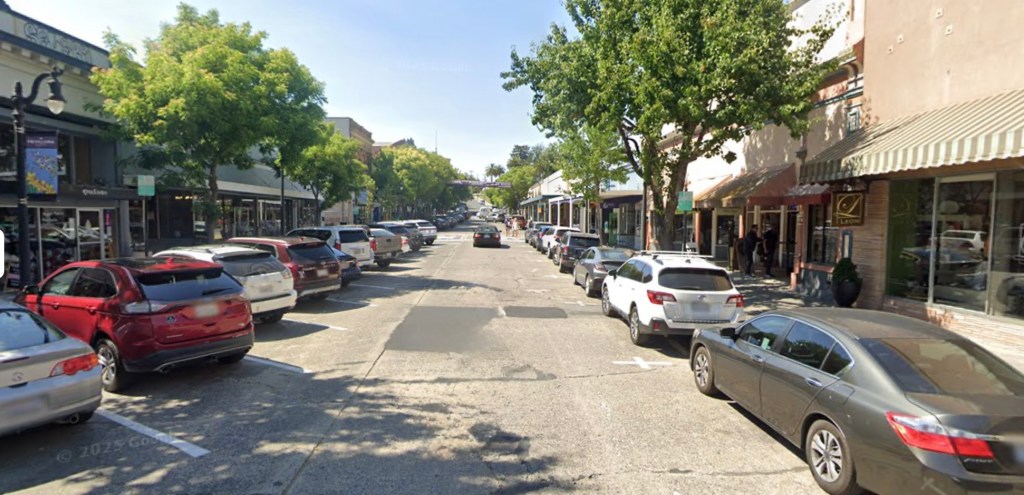
Look at this picture. That’s Kentucky Street in downtown Petaluma. See a parking space?
I don’t either.
I generally subscribe to the “expect the worst…and it will be worse, much…much worse” outlook on life. It’s a step beyond the ol’ “…expect the worst and be pleasantly surprised” … nonsense which, if you think about it, is just chicken shit equivocation.
If you want to hedge your bets, I can’t stop you. The world is full of Ara Parseghians. (Ara was the Notre Dame football coach who, in the 1966 national championship game between his No. 1 Fighting Irish and No. 2 Michigan State’s Spartans, on his own 31-yard-line with 1:30 left, chose to run out the clock to preserve the “tie” rather than risk a turnover going for the win.)
Man up Ara.
Commit. Be a pessimist and expect the fumble. Or be an optimist and march for the field goal. But either way, own it. Embrace it. Screw the tie, march down the field, and go for it.
Me? I expect the worst. It’s safer. None of that pesky disappointment.
Now, Cathy. She take’s optimism to a Jedi Knight level. She believes in manifestation.
I look at the parking on Kentucky Street and think “Skip the bookstore; I’ll order on Amazon.” Cathy says, “We’re damn well going to Copperfields and after I buy a Santa Barbara Magazine I’m ordering guacamole and a Diet Pepsi at Mi Pueblo El Centro.” Then she closes her eyes, visualizes white reverse lights and, like Moses parting the Red Sea, a parking space appears. She is the Uri Geller of auto transmissions. Doesn’t matter if it’s manual, on the column, on the floor, or automatic. She can shift your car from park into reverse with just her mind from 31 yards away.
Which brings me to last Friday and this headline:
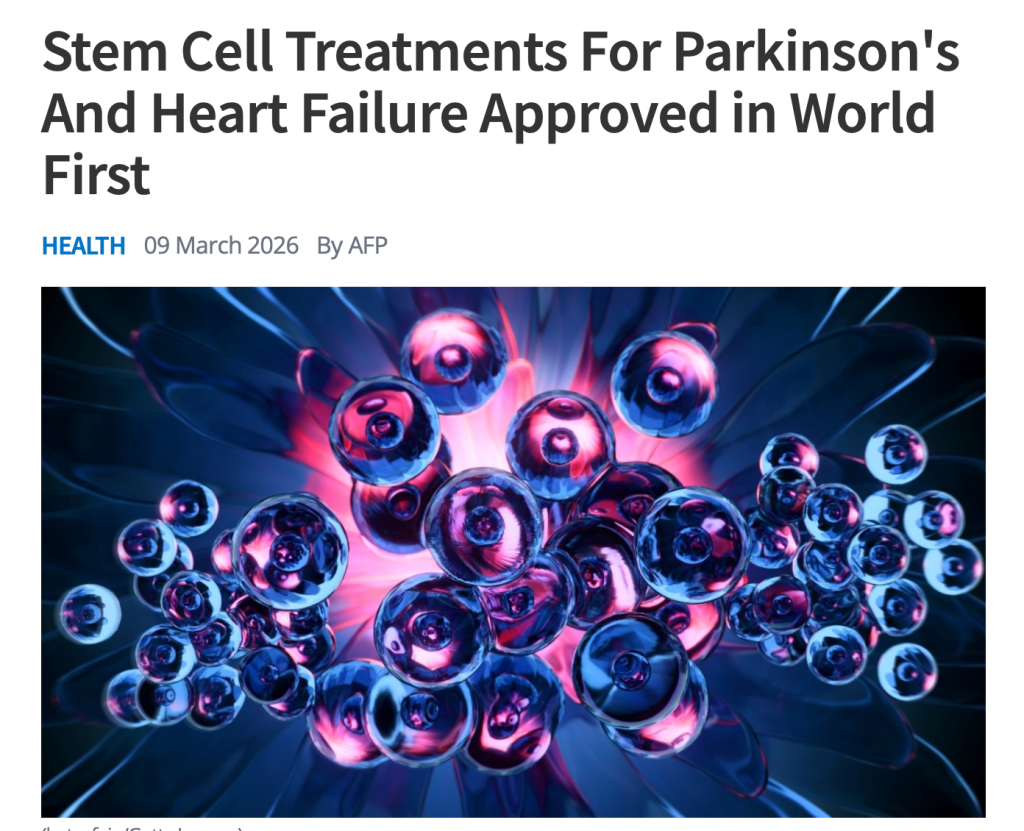
Apparently, the good folks at Sumitomo Pharma in Osaka have been given the green light from Japan’s health ministry for the manufacture and sale of Amchepry, a stem cell treatment for Parkies. It rolls out this summer. Here’s the skinny:
Back in 2012, this man shared the Nobel Prize for Medicine.
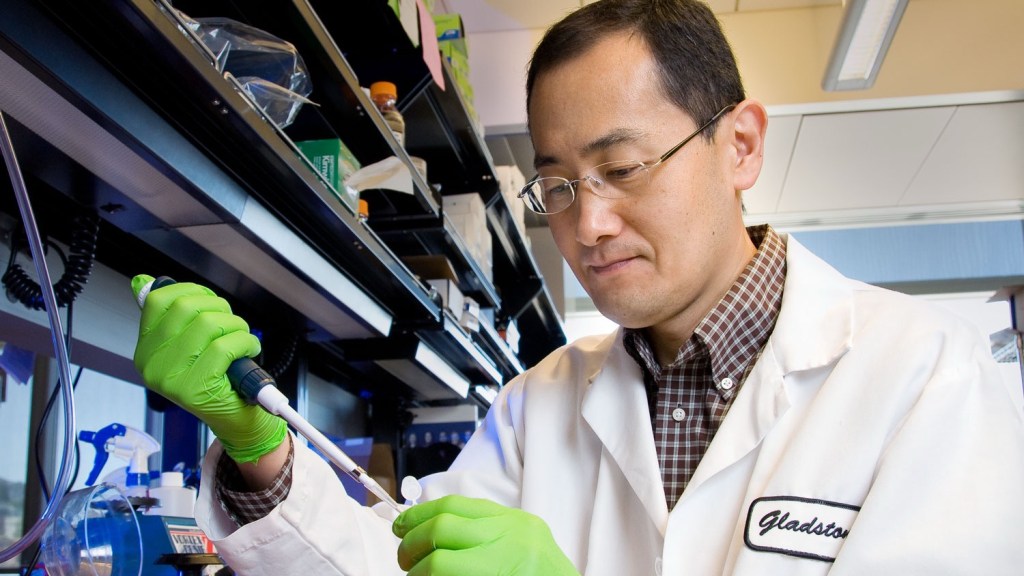
His name is Shinya Yamanaka. He is a sixty-three-year-old research doctor and professor who currently is the Director Emeritus of something called the Center for IPS Research and Application (aka CIRA) at Kyoto University, and a Senior Investigator at Gladstone Institutes.
Yamanaka pioneered the science of “induced pluripotent stem cells”, now referred to as IPS cells. Here is one now…
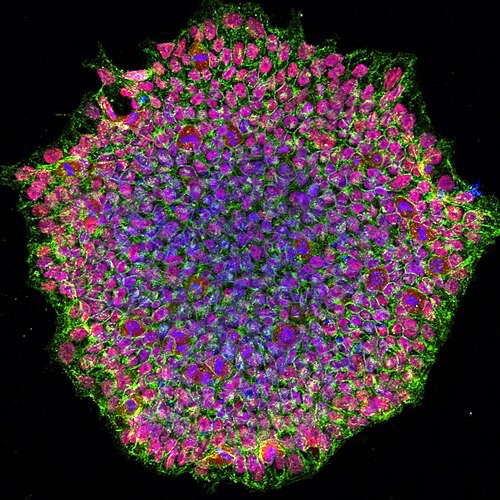
Stem cells are cells in the embryo which haven’t yet been given an assignment on what to do. They might grow up to be brain cells, lung cells, heart cells. They’re like a kid on the sideline of a pick-up basketball game waiting to be chosen, not sure if he will be a shirt or a skin.
In your cellular world, this is what you call “pluri-potential.”
IPS cells are not taken from the embryo with all the messy ethical cloning issues that entails. They are grown-up, already assigned cells, usually skin or blood, that have been reverse engineered into an unassigned player. These little guys don’t have to be skin or blood cells but can grow up to be whatever they…maybe I should say Shinya and his team…want them to be. Hence the name, “pluripotent.”
Ka-Plu-eee Potential, baby! Think cloning without all the messy ethical issues.
So, the Sumitomo folks get together with Shinya and say, “Hey, it just so happens that there’s 10 million folks in the world where the dopamine producing cells in their brains have died. They could use some new ones. Let’s use IPS cells to grow up to be dopamine producers.
Voila…Amchepry Cell Therapy. We take assigned blood or skin cells, convert them into dopaminergic neuron progenitor cells, surgically implant them into the striatum in the basal ganglia deep in the brain, and hope the little suckers will grow.
And…god willing and the creek don’t rise…it seems to work.
That’s Japan. What about here?
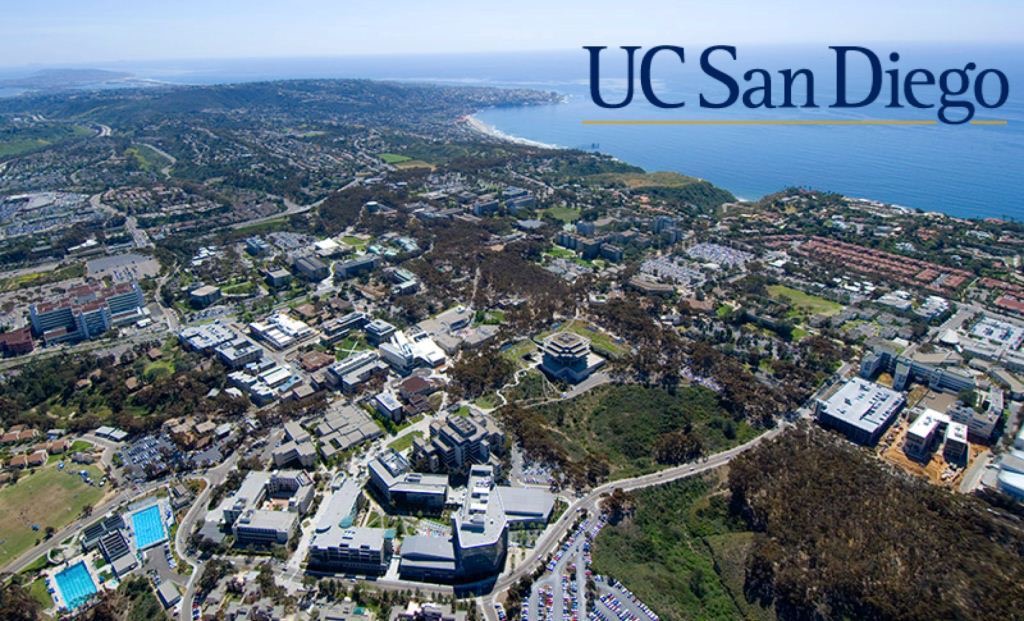
Well, it turns out the same treatment is now undergoing a Phase 1 / 2 Trial at U.C. San Diego by Professor Joseph Ciacci. Seven lucky contestants will participate. It is expected to be completed in 2028.
I know. I called them. Very nice people.
And they’re interested. I fit the age bracket. My Parkys’ became symptomatic over five years ago. My restless leg and Charcot Marie Tooth co-morbidities don’t preclude me, and the application period is open throughout this year. Plenty of time for me to ponder my options.
That’s the good news.
The bad news is that…well…you’re a lawyer Rob. What’s the “Consent Form” say?
- Hmmm, to start off: a lot of screening assessments. An “off med” day. (I’ve been through one of those; worst night of my life.) Pulmonary function testing. No problem; I have the heart and lungs of Secretariat. Pysch testing. Been through that. Marginal grades, but I passed. Gotta keep a symptoms diary. Histories, blood tests (127 to 136 teaspoons), blood collection for storage for future testing, urine tests, EKG’s, head and chest CT’s, head MRIs, MRI and angiogram of the arteries. And that’s just to see if you qualify.
- Then there’s the “baseline period” when they repeat all of that, plus a PET scan.
- And then if you are selected, you start on an immunosuppressant to stop your body from rejecting your cells, which you continue to take for 15 months;
- And then, on the big day, more blood tests, an MRI and CT, then they shave your head, then drill (I think it’s a Makita) two 3.5cm holes in each side of your skull, and then inject 7 million stem cells in your brain on each side;
- And then you spend three delightful days at the Jacobs Medical Center at La Jolla…fat, dumb and bald.
But wait, there’s more…
Follow up visits at weeks 1, 4, 8, 12 and 16 , followed by more visits at 6, 8, 10, 12, 16, 18, 20, 22 and 24 months. And lab work done between each of those visits. During which time the immunosuppressant will make you susceptible to every damn bug in Sonoma and San Diego Counties and the ones commuting with you on the airline rides there and back.
And…then? Then?
Well…it may not work.
In Japan the seven subjects enjoyed a 20% improvement on test scores when measured off medication and 36% improvement when measured during on periods.
Interesting thought problem, isn’t it?
Would you go through all that for an uncertain result? Would you up and move, rent a place in San Diego for two to three years, a large part of which will be in a doctor’s office, some of which in very unpleasant circumstances, and miss a lot of grandchildren birthdays and Little League games if there was only a 50% chance it might work and, if it does work, only reduce, without eliminating, all of the symptoms?
Or would you say, “Thanks but no thanks” and seven years from now, watching your granddaughter blowing the twelve candles out on her birthday cake, regret that you declined to participate in trials of a treatment then deemed a cure, approved by the FDA, but available only to gazillionaires who can afford it?
I know what Cathy would say…
[checking Duolingo]…
こんにちは、先生。夫が車を駐車しています
[“Hello Doctor; my husband is parking the car.]
 Can't Hold Still
That’s a toughie Rob….the thing is Parky is not going to ever improve on its own. The up side is San Diego is awesome (especially Coronado) 😉
LikeLike
DEFINITELY A DILEMMA ROB. Mydear friend died in December, his trials with hospitals trying to extend his time on earth were horrible, and if anything, reduced the quality of life he lived. Best wishes for you and Cathy as you face this decision together.
LikeLike