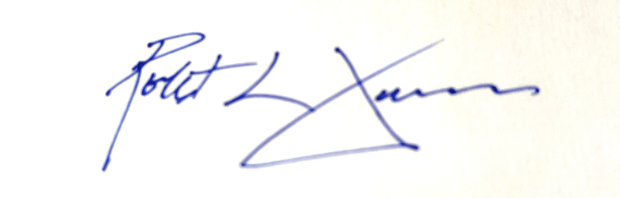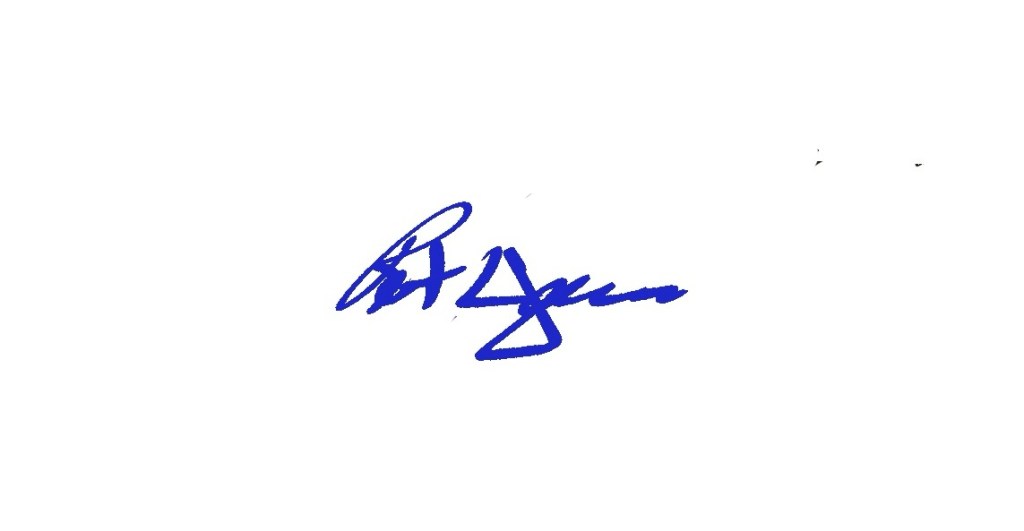
The Colander Treatment

March 16, 2026

Those of you who know me know I have …well, let’s be honest…a big head.

Some of you are nodding. Some with your hands up. That’s okay. I have it coming. My head is big.

In several ways.

First, there is my inflated ego. 

This dates back to elementary school. It was the Spring Parent Pageant of 1962 and our first-grade teacher Mrs. Durling decided our class contribution would be a May Pole. 

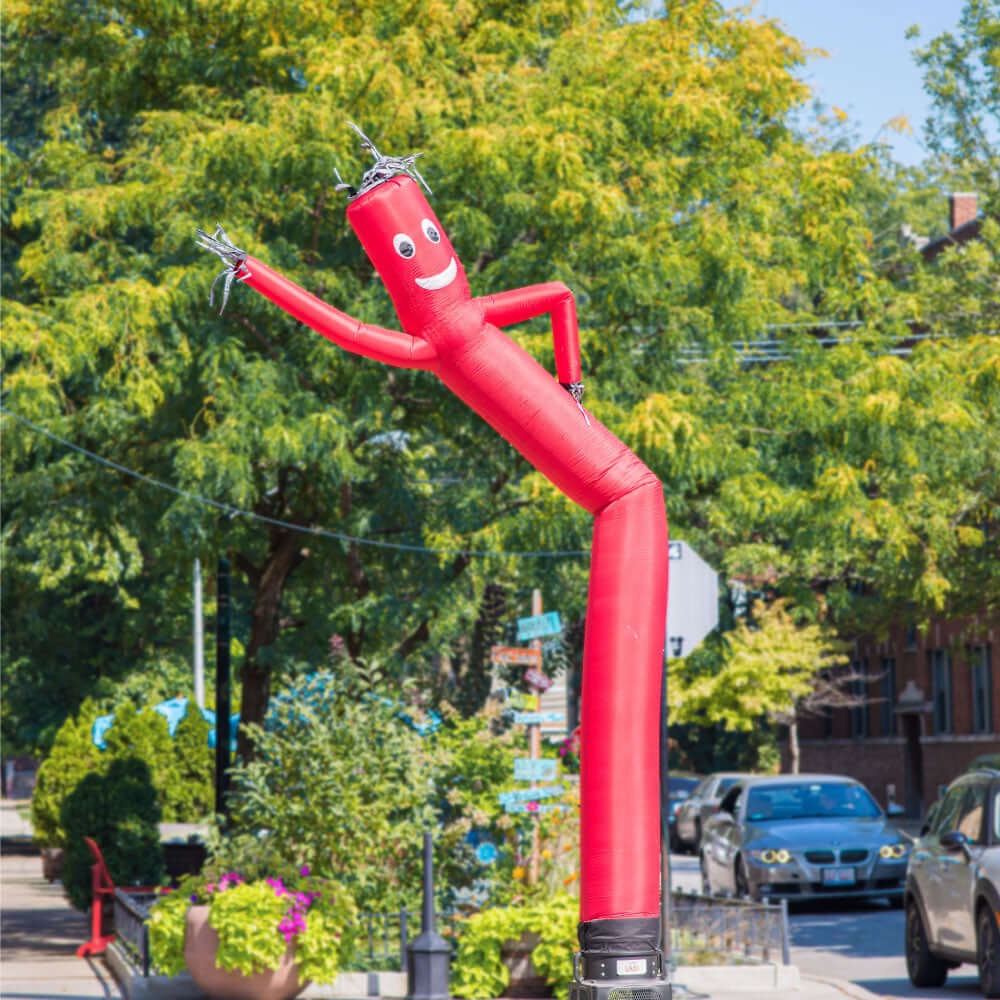
Kinda like this one but…class size being a perennial problem…with more like 25 kids.

The pole consisted of what must have been an eight-foot-long dowel on top of which was nailed a tin pie plate. Crepe paper streamers, attached to the pie plate, stretched out to each member of the class who, pacing themselves carefully so as not to trip over the student in front of them, walked in a circle to some …I don’t know…jaunty, “Spring-like” melody. Probably “Teddy Bears’ Picnic”

Unfortunately, the May Pole had a structural flaw which went undetected in Mrs. Durling’s careful construction of the prototype. If the pie plate did not spin on the nail attached to the top of the pole, the crepe paper streamers would begin to wrap around the pole as my classmates…still focused on the heels of the kid in front of them…continued to circle. 

Centrifugal force, being what it is, the kids out at the end of the streamers would either have to pay attention, slow and adjust…this was just too much to ask… or the class would gradually be drawn closer and closer to the pole as their crepe paper leashes grew shorter and shorter.  This happened repeatedly in rehearsals, prompting Mrs. Durling to throw up her hands in despair and cast about for an answer.

The solution was obvious. 

She needed Chuck Yaeger. A steely eyed test pilot to hold the pole. 

The kid holding the pole must have “situational awareness.” He or she must have the wherewithal, uncommon in the First Grade, and especially uncommon in front of a crowd, to look up, monitor the status of the pie tin and crepe paper, and if the design flaw manifested itself, adjust, improvise, rotate his body at just the right speed, so as not to send the pole, the pageant and Mrs. Durling into a tailspin.

To this day, I remember the head-inflating exhilaration of the moment when, after another failed rehearsal, I saw Mrs. Durling’s eyes first squint in consternation and concentration, then widen as the solution dawned on her and then…scanning the class searching for the kid capable of such a tall order…her gaze settled with a look of relief…

On me.

“Rob? You think you could do this?”

“Yes ma’am… [taking the pole]…I got this.”

Thus, was born an inflated ego. 

But ego is not the only measure of my big head. Anatomically, I have a big head.

In this day and age of adjustable ball caps, we’ve lost the need of hat sizing. But when a fitted hat is required, it is good to remember that a small hat size is 6 ¾ to 6 7/8 A medium is 7 to 7 1/8. Large is 7 ¼ to 7 3/8. And extra-large is 7 ½ to 7 5/8.

Put me down for an XL. Something in the Lord Big Helmet size.

Let’s see…Ego? Check. Circumference? Check. How about thickness? The general consensus among those who have studied me, in the wild and in captivity, is that I have a thick skull. This seems to be based on deductive conclusions drawn from observed behavior rather than actual measurement.

Which begs the question…where are you going with this Herr Big Brain?

Well…hopefully…here.

What I call “The Colander Treatment.”

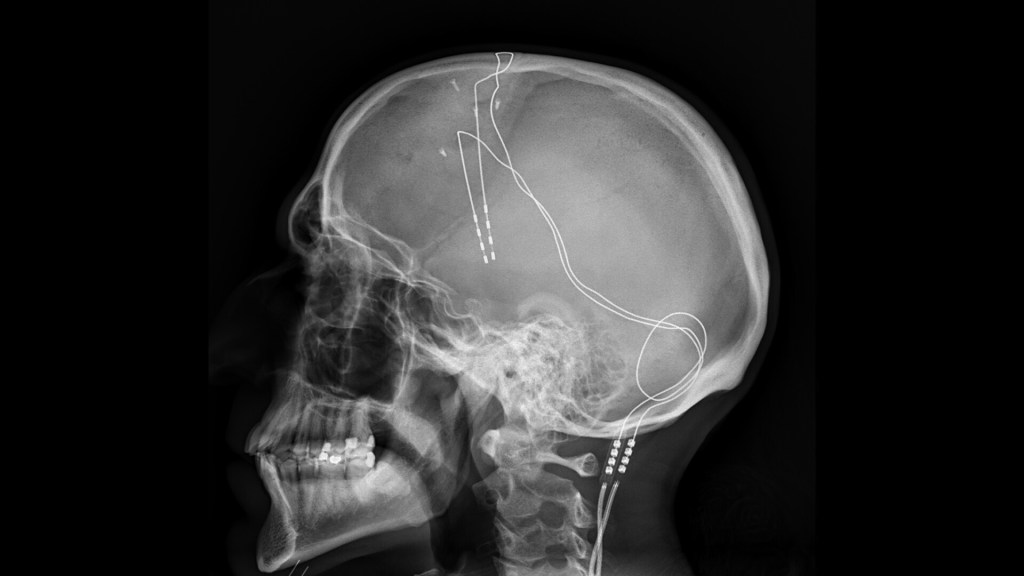
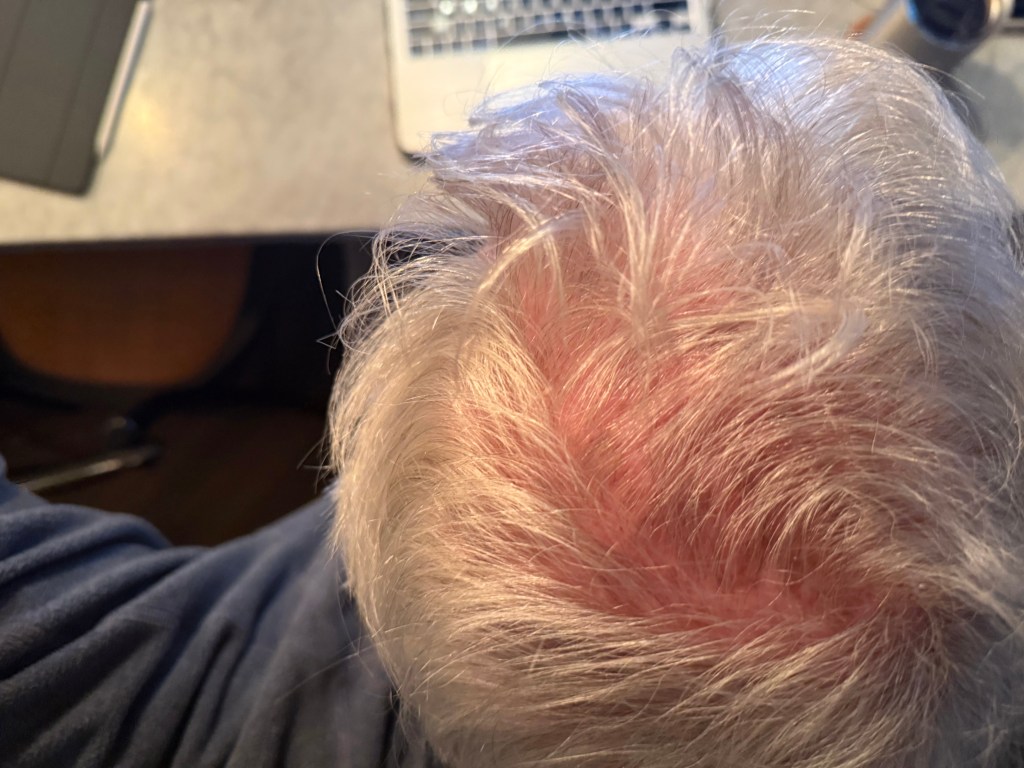
If you want to cut down on the shakes and the good ol’ yabba dabba medicine isn’t dabba-doing the trick anymore, you have two options. The first is called Deep Brain Stimulation or DBS.

DBS is brain surgery. The docs shave your head, bore a hole in your skull the size of a dime, insert wires that travel from deep in your brain to a “pacemaker” installed beneath the skin in your chest. These devices can later be “tuned” to KFRC, probably Dr. Donald D. Rose, and programmed over time to maximize the benefits. This requires follow up visits to change the batteries and fine tune the gizmo. And the surgery runs the risk of a nasty thing called brain bleeds. And…oh yeah… it can further screw up your balance.
Another alternative is called Focused Ultrasound. Here’s how the folks at UCSF describe it.

During this outpatient procedure, high-intensity sound waves, guided by MRI, are focused on [a tiny spot]. These sound waves pass painlessly and safely through skin, bone and brain to reach their target. Much as a magnifying glass can focus sunlight to burn a hole in paper, the focused ultrasound generates enough heat to burn cells in [the spot] without harming surrounding tissue. Recovery time is short, and the treatment can significantly reduce tremor, improving the ability to perform daily activities, such as eating, drinking and writing. 

It’s an outpatient procedure. And I do mean OUT patient. You’re awake during the whole thing. You actually help by responding to “tasks.”   My grandsons Jackson and Finn love tasks. A task might be something like “Count how many letter “Ts” you can see from where we are sitting in the bleachers here in the Rincon Valley Little League Park” or “Turn around, look at that family in the pizza parlor; study everything about them; now turn back toward me and tell me…what color eyes does the dad have?”

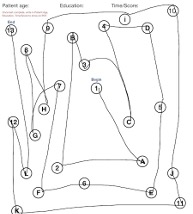
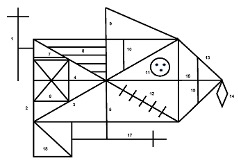
Check this out…this is one of the tasks I’m told you are given while in the machine:

I call it the Spirograph Test. 

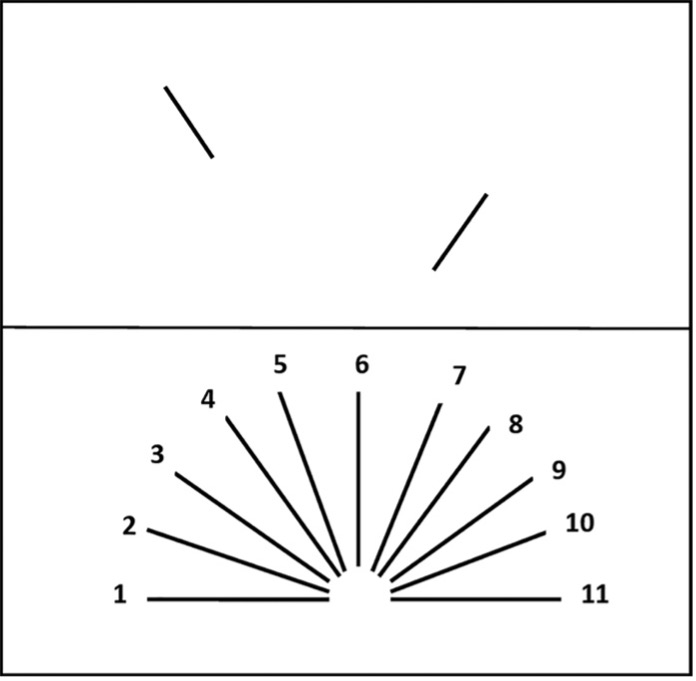
“With your right hand, Rob; I want you to draw as smooth a line as you can inside the channel from the center to the outside. Now draw a straight horizontal line…keep it smooth and straight…from left to right. Now do the same thing again with your left hand.”

Kids, try this experiment at home.

Here’s what happens when I do it now…

So I am told…so I hope…once shaved, strapped into the water cooled colander and clamped onto the sliding table, I will be given this “task” and my line will…by the miracle of modern medical magic…be as smooth as a baby’s butt. And when it’s over, I will sit up and walk away. 

It has its pros and cons.

You must get your head shaved, just as with DBS…I think I’ll go for the Yul Brenner rather than the Telly Savalas…but they don’t have to drill a hole in your head. It’s not as precise as DBS. It is a “one-and-done” procedure and doesn’t always work. You can’t adjust later and tune into KFRC, but you also don’t have to pack a transistor radio around in your chest. There is the chance for side effects (apparently the most common being a “softened” voice which, curiously, Cathy seems to think is an acceptable risk). And, if I do it, we can rule out the remote possibility of joining in a stem cell trial in San Diego.

One thing is certain. It might not work and it sure as hell is not a cure. 

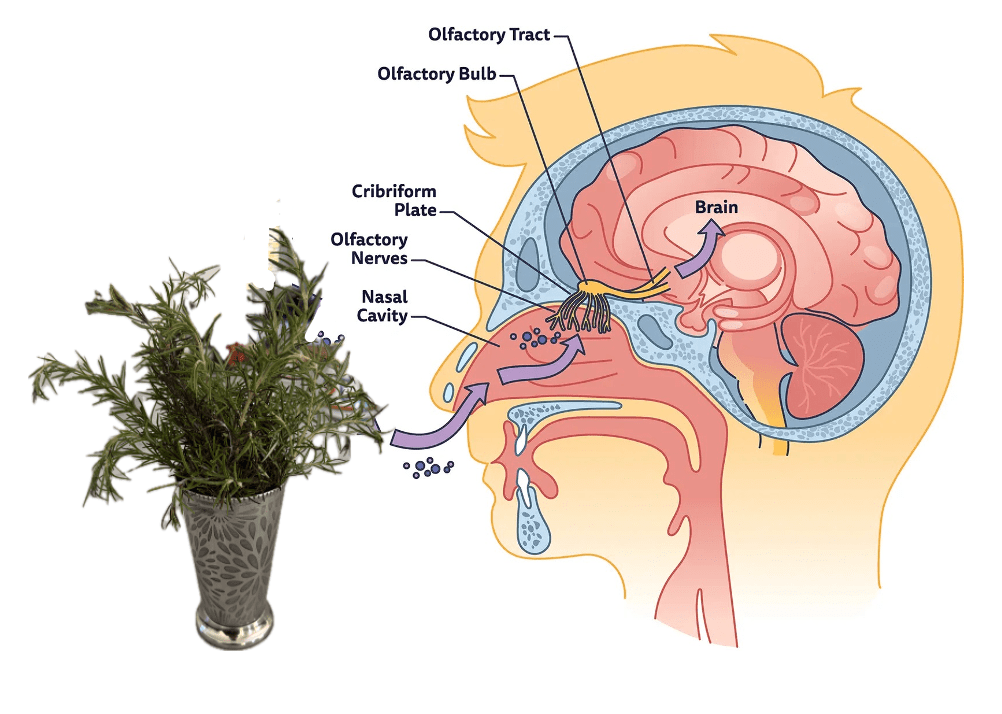
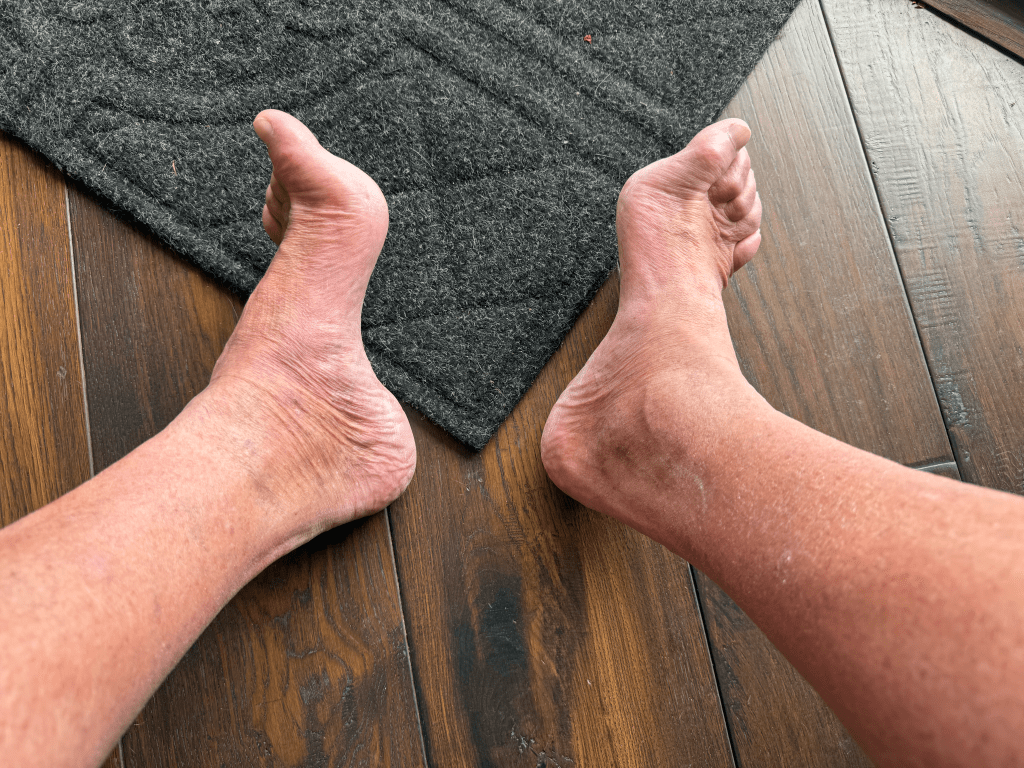
It will not stop the progression of my Parkys. It won’t bring back my sense of smell, restore my balance, correct my swallowing problem, stop all the autonomic shit that is gradually shutting down and making other parts of my life like peeing and pooping, emptying my stomach and my bladder difficult. It won’t make my icy cold and dead-to-the-touch ankles and feet feel warm again. It won’t stop this fucking Restless Legs Syndrome which every night, just when I might hope to find some comfort in sleep, kicks in…I mean KICKS in… and permits more rest for me standing up and walking than lying down and sleeping.

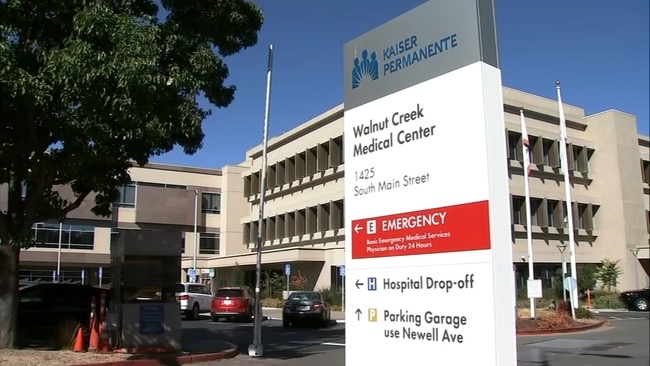
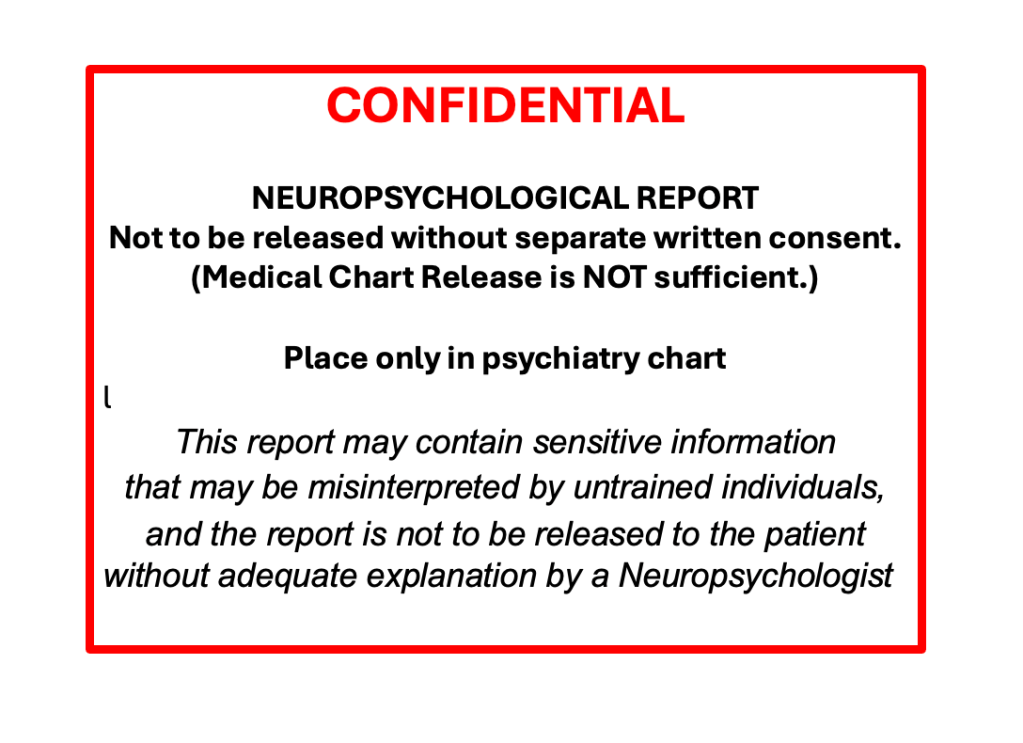
There’s a boatload of tests I’ve had to pass to qualify. An MRI of my head. A psych evaluation by a shrink in Walnut Creek. An off-med night from hell. (More about those to come).

But I should know soon if I’m a candidate and there might be a chance…I’m not getting my hopes up…okay, I am getting my hopes up…that maybe, just maybe the hand tremors will ease. And maybe, just maybe, I might play some golf without embarrassing myself entirely or make some sawdust without hurting myself terminally.

A boy can dream.

Trials, Tribulations and Wishful Thinking

Friday, March 13, 2026

Look at this picture. That’s Kentucky Street in downtown Petaluma. See a parking space?

I don’t either.

I generally subscribe to the “expect the worst…and it will be worse, much…much worse” outlook on life. It’s a step beyond the ol’ “…expect the worst and be pleasantly surprised” … nonsense which, if you think about it, is just chicken shit equivocation. 

If you want to hedge your bets, I can’t stop you. The world is full of Ara Parseghians. (Ara was the Notre Dame football coach who, in the 1966 national championship game between his No. 1 Fighting Irish and No. 2 Michigan State’s Spartans, on his own 31-yard-line with 1:30 left, chose to run out the clock to preserve the “tie” rather than risk a turnover going for the win.) 

Man up Ara.

Commit.  Be a pessimist and expect the fumble. Or be an optimist and march for the field goal. But either way, own it.  Embrace it. Screw the tie, march down the field, and go for it.

Me? I expect the worst.  It’s safer. None of that pesky disappointment.

Now, Cathy. She take’s optimism to a Jedi Knight level. She believes in manifestation. 

I look at the parking on Kentucky Street and think “Skip the bookstore; I’ll order on Amazon.” Cathy says, “We’re damn well going to Copperfields and after I buy a Santa Barbara Magazine I’m ordering guacamole and a Diet Pepsi at Mi Pueblo El Centro.” Then she closes her eyes, visualizes white reverse lights and, like Moses parting the Red Sea, a parking space appears. She is the Uri Geller of auto transmissions. Doesn’t matter if it’s manual, on the column, on the floor, or automatic. She can shift your car from park into reverse with just her mind from 31 yards away.

Which brings me to last Friday and this headline:

Apparently, the good folks at Sumitomo Pharma in Osaka have been given the green light from Japan’s health ministry for the manufacture and sale of Amchepry, a stem cell treatment for Parkies. It rolls out this summer. Here’s the skinny:

Back in 2012, this man shared the Nobel Prize for Medicine. 

His name is Shinya Yamanaka. He is a sixty-three-year-old research doctor and professor who currently is the Director Emeritus of something called the Center for IPS Research and Application (aka CIRA) at Kyoto University, and a Senior Investigator at Gladstone Institutes.

Yamanaka pioneered the science of “induced pluripotent stem cells”, now referred to as IPS cells. Here is one now…

Stem cells are cells in the embryo which haven’t yet been given an assignment on what to do. They might grow up to be brain cells, lung cells, heart cells. They’re like a kid on the sideline of a pick-up basketball game waiting to be chosen, not sure if he will be a shirt or a skin.

In your cellular world, this is what you call “pluri-potential.”

IPS cells are not taken from the embryo with all the messy ethical cloning issues that entails. They are  grown-up, already assigned cells, usually skin or blood, that have been reverse engineered into an unassigned player. These little guys don’t have to be skin or blood cells but can grow up to be whatever they…maybe I should say Shinya and his team…want them to be. Hence the name, “pluripotent.”

Ka-Plu-eee Potential, baby! Think cloning without all the messy ethical issues.

So, the Sumitomo folks get together with Shinya and say, “Hey, it just so happens that there’s 10 million folks in the world where the dopamine producing cells in their brains have died. They could use some new ones.  Let’s use IPS cells to grow up to be dopamine producers. 

Voila…Amchepry Cell Therapy. We take assigned blood or skin cells, convert them into dopaminergic neuron progenitor cells, surgically implant them into the striatum in the basal ganglia deep in the brain, and hope the little suckers will grow.

And…god willing and the creek don’t rise…it seems to work.

That’s Japan. What about here?

Well, it turns out the same treatment is now undergoing a Phase 1 / 2 Trial at U.C. San Diego by Professor Joseph Ciacci. Seven lucky contestants will participate. It is expected to be completed in 2028.

I know. I called them. Very nice people. 

And they’re interested. I fit the age bracket. My Parkys’ became symptomatic over five years ago. My restless leg and Charcot Marie Tooth co-morbidities don’t preclude me, and the application period is open throughout this year. Plenty of time for me to ponder my options.

That’s the good news.

The bad news is that…well…you’re a lawyer Rob. What’s the “Consent Form” say?

  • Hmmm, to start off: a lot of screening assessments. An “off med” day. (I’ve been through one of those; worst night of my life.) Pulmonary function testing. No problem; I have the heart and lungs of Secretariat. Pysch testing. Been through that. Marginal grades, but I passed. Gotta keep a symptoms diary.  Histories, blood tests (127 to 136 teaspoons), blood collection for storage for future testing, urine tests, EKG’s, head and chest CT’s, head MRIs, MRI and angiogram of the arteries. And that’s just to see if you qualify.
  • Then there’s the “baseline period” when they repeat all of that, plus a PET scan.
  • And then if you are selected, you start on an immunosuppressant to stop your body from rejecting your cells, which you continue to take for 15 months;
  • And then, on the big day, more blood tests, an MRI and CT,  then they shave your head, then drill (I think it’s a Makita) two 3.5cm holes in each side of your skull, and then inject 7 million stem cells in your brain on each side;
  • And then you spend three delightful days at the Jacobs Medical Center at La Jolla…fat, dumb and bald.

But wait, there’s more…

Follow up visits at  weeks 1, 4, 8, 12  and 16 , followed by more visits at 6, 8, 10, 12, 16, 18, 20, 22 and 24 months. And lab work done between each of those visits. During which time the immunosuppressant will make you susceptible to every damn bug in Sonoma and San Diego Counties and the ones commuting with you on the airline rides there and back.

And…then? Then?

Well…it may not work.

In Japan the seven subjects enjoyed a 20% improvement on test scores when measured off medication and 36% improvement when measured during on periods.

Interesting thought problem, isn’t it?

Would you go through all that for an uncertain result? Would you up and move,  rent a place in San Diego for two to three years, a large part of which will be in a doctor’s office, some of which in very unpleasant circumstances,  and miss a lot of grandchildren birthdays and Little League games if there was only a 50% chance it might work and, if it does work, only reduce, without eliminating, all of the symptoms?

Or would you say, “Thanks but no thanks” and seven years from now, watching your granddaughter blowing the twelve candles out on her birthday cake, regret that you declined to participate in trials of a treatment then deemed a cure, approved by the FDA, but available only to gazillionaires who can afford it?

I know what Cathy would say…

[checking Duolingo]…

こんにちは、先生。夫が車を駐車しています

[“Hello Doctor; my husband is parking the car.]

The Culotte King

March 7, 2026

“No, Cathy, they’re not clam diggers.”

“Pedal pushers?”

“No.”

“Capri pants?”

“No.”

Culottes?”

“NO!”

Whenever I leave for class, Cathy likes to tease me about my wardrobe. It’s good natured of course. 

“Really?” she asks, sizing me up.

“You don’t understand,” I say. “I need to look the part if I’m going to ‘Part the Wild Horse’s Mane’ or ‘Grasp the Bird’s Tail.’”

She rolls her eyes and, giving me a big hug and pat on the back says, “Eye of the tiger, babe. Eye of the tiger.” 

***

When I was first diagnosed with Parky’s, my neurologist, a movement disorder specialist, suggested that I work out as much as possible. Yeah, my Peloton was good for cardio and, yeah, my weights were good for strength, but what I really needed was to work on my movement.

Movement? Okaaaaay…like?

Like, say, boxing. 

I know. I had the same reaction.

“As tempting as it is doc, I’m not sure punching people is the answer. “

There was a good reason for my reluctance. 

You see, the last time I boxed was in the 10th grade when Cue Ball Carr…the wrestling coach who bore a striking resemblance to Mr. Clean (without the earring) …gave me a poor grade because I opted to dance away from, rather than go toe-to-pugilistic-toe with Bruce Wallace, a guy who lettered in wrestling and had biceps bigger than my thighs. I figured with my cross country conditioning I might outlast Bruce and score a surprise late round TKO when he collapsed in exhaustion trying to chase me down around the wrestling mat. Cue Ball was having none of that, and demanded I mix it up.

It didn’t go well. 

Rock Steady Boxing is a nationwide organization created to help folks “fight back” against Parkinson’s. The local chapter operates out of this dojo on Petaluma Blvd. 

The idea behind the program is that, if we can teach folks to land a punch on a speed bag, much like Bruce landed on me, we can build the kind of balance and focused movement that we Parkies need if we are to offset what’s coming.  It won’t cure the damn affliction but, studies show, it slows it down.

It’s a wonderful program run by dedicated instructors who give of their time so Parkies, some barely able to stand or lift their arms, many brought by caregivers who watch from the wings,  can gamely duke it out with the infuriatingly indifferent inevitability of Parky degeneration.

The pugilists and their coaches are remarkable people. They are truly inspiring.

So? I know what you want to ask…

“What’s it like, Rob?”

I don’t know. I haven’t tried it.

Why not?

It’s not something I’m proud to admit but, if I am honest, I’m scared.

Why?

Well, I suppose it’s just too real a glimpse of my future.  Not tomorrow, not the day after, the month after or the year after, but it’s coming. The future is coming for me like a Bruce Wallace I can’t dance away from and will not likely summon the courage to confront.

The future scares me.

***

“WARDROBE!”

“Wdya think, Cath? This one or that one?

Blue or the beige?

Too much?

“Yeah, probably.

What about study materials? You know my motto, “Why actually do something when you can put it off by reading about it?”

Too much?

“Yeah, probably.

***

I started tai chi about a year ago. We meet in the the back room of the dojo where the lighting is dim, the HVAC can be a tad light on the H, and where a poster of Chuck Norris in his pre Walker-Texas-Ranger days greets you as you enter.

The class size ranges from three to…oh, I don’t know…maybe four. We are a clandestine wing of Rock Steady. There is Peter and Jo and Eddie, the veterans who pioneered the class and have kindly taken me under their wing.

The fella on the left is our teacher, Bob Klein.

Bob is a kind, patient and soft spoken instructor…the opposite of Cue Ball Carr… who has studied tai chi for over thirty years.

Peter, Jo and Eddie have become my friends. We are learning what is known as the Yang style long form. It is a series of 102 movements. Each movement is precisely choreographed. Some invoke images like “White Crain Spreads Its Wings” or “Tiger Returns to Mountain” or “High Pat on Horse” or “Step Back and Repulse the Monkey.”‘

I’ve been away for a few weeks while battling old age shit other than Parky’s…what the docs affectionately refer to by the pleasant name “co-morbidities”…, but when last I was in class, I was studying Form No. 61.

***

“Cath? Have you seen my earbuds?”

When I practice in the back yard, I listen to the soundtracks to The Karate Kid …you know, the haunting pipe music when Danial-San peers down the beach and sees Mr. Myagi standing on one foot atop an old pier… or to The Last Samurai, when Tom Cruise walks through the cherry blossoms contemplating the meaning of life before he goes off and kicks ass.

I’m not very good. I don’t bend my knees enough, my kicks are short lived and spastic, and when a movement calls for one or the other foot to land softly on the mat, mine tend to land with a loud thunk.

Bob says I need to work on my thunks. Thunks are apparently not what we’re after in Tai Chi.

Quick word of advice to aspiring students following in my thunks…Before you can study Tai chi movements, you must first learn to stand and then how to walk. Neither is easy.

Here is a cheat sheet for how to stand. See what I mean?

And here is a cheat sheet for how to walk.

I could spend an hour a day for the next six months and not master the Tai Chi walk. It requires weighting and unweighting of your feet, balance, and fluid motion, all of which is damn near impossible on my size seven and a half super arched hammertoed neuropathy ridden feet with weight bearing surface areas of maybe four square inches per foot.

Care to try it? Check out this website. It’ll give you some idea.

http://www.everydaytaichi.org/tai-chi-walk.html

***

“Hey Cathy, did you see this piece in the New York Times last week? They should have interviewed me.”

“You know…’off the record.’ Maybe… ‘on background.’ I could have been one of those ‘inside sources’ you always read about who are ‘…granted immunity to talk freely for fear of retaliation.'”

https://www.nytimes.com/2026/02/28/well/move/tai-chi-walking-balance-longevity.html

“Says here tai chi walking will improve my ‘proprioception.'”

“Yeah, I don’t know what that is, either.”

“Wait…here’s another article.”

“Apparently ‘proprioception’ is the ‘sense of where you are in space.'”

Pro…pree…oh? Prop…I…Oh… Hell, I can’t pronounce it, but I gotta get me some of that.

My prioception is prehistoric. It sure isn’t pro level. It’s not even amateur level. I’m Daniel-san before Mr. Myagi teaches him to wax-on, wax-off, sand-the-floor, or paint-the-fence.

I don’t know where the hell I am and this damn Parky’s is my own personal “Show-no-mercy-Cobra Kai Johnny.” I can’t get my feet under me because the asshole in the black pajamas keeps sweeping my legs. I need Mr. Myagi to do that thing where he claps his hands together, rubs them vigorously like he was starting a fire, and lays his hot hands on me.

That’s what I need.

***

My favorite part of tai chi classes is when Coach Bob begins and ends with the “gōngshǒu lǐ.” That means “cupped hand greeting.” It is a salute, of sorts.

Here is a Powerpoint slide I made. (I know…it’s a compulsion; at last count my Tai Chi PP presentation now has 95 pages and is growing.) On the right is a description of how to do the salute. On the left, what the salute means.

The salute is the sun and the moon. The Ying and the Yang. It says, “Yes, I will fight when I must, but I choose respect and control, modesty and humility, refinement and nobility.”

I like that.

Bruce Lee knew tai chi. He encouraged folks struggling with adversity to…

“Be like water.”

Empty your mind of fear and rigidity. Keep moving. Be formless. Be shapeless. Adapt as water does to the container. Yield, shift your weight, balance. Find, as water does, its own level.

When you can’t seem to find yourself, when fear bears down like a dark sleeper wave, and all seems too much to bear, remember Bruce…Lee, not Wallace…and the fear litany from one of my favorite books, Frank Herbert’s Dune


I will face my fear.
I will permit it to pass over me and through me.
And when it has gone past, I will turn the inner eye to see its path.
Where the fear has gone there will be nothing.
Only I will remain.”

Electric Football

March 2, 2026

“When you’re experiencing a low…when the medication isn’t working, Rob…what does it feel like?” Dr. Nandipati asked.

“That’s a tough one doc. It’s hard to describe.”

“Try.”

“Well…it’s like …it’s like…Electric Football.”

I could tell from the sympathetic smile on her face that my description as apt and, dare I say…poetic… as it was, required a working knowledge of boyhood in the 1960’s. Apparently…I’m not sure why…that was not included in the 21st century pre-med curriculum at Cornell or post-med residency at Mt. Sinai.

Ivy League, schmivy league.

I blame Mrs. Hogan. 

Not for my neurologist’s poor education on baby boomer boys…as troubling at that was…but for a tendency when, struggling to get these damn words to work , to rely on all those things in 8th grade English the other kids hated and sensibly forgot.

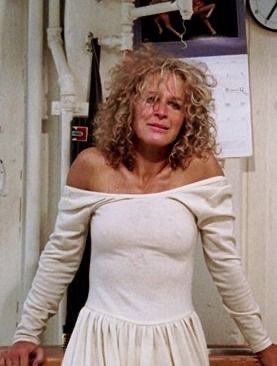
You know…similes, metaphors, analogies, symbolism, alliteration and the elusive onomatopoeia.  

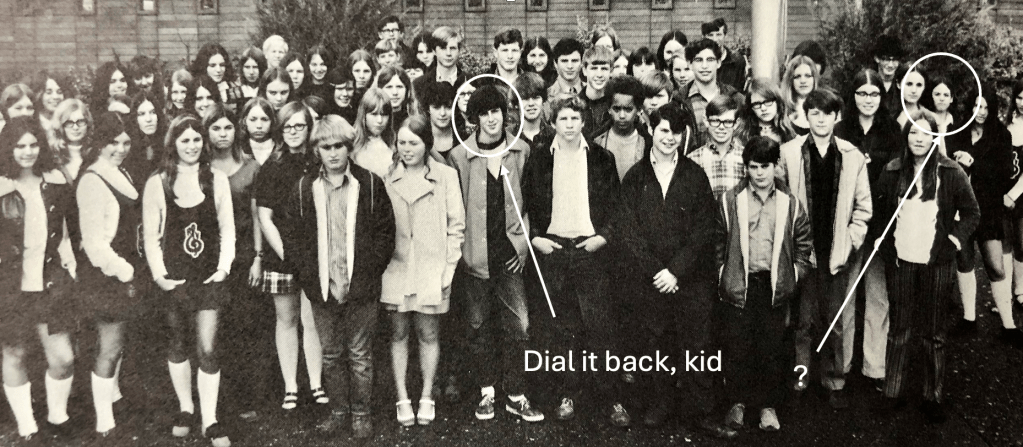
Mrs. Hogan was a no-nonsense 8th grade English teacher at Rincon Valley Junior High. (“Home of the Mighty Falcons”). Here she is. The gal with her right hand on her shoulder giving me the stank eye.

I got that a lot.

The young lady in the center of the photograph some of you will recognize as a reader of this blog.

Quick Sherman. Into the way back machine. Set the destination to October of 1969. First period. Let’s make it a Monday.”

  • Rob: “Okay, Mrs. H, I think I got this. A simile can be a metaphor but a metaphor need not be a simile. Right?”
  • Mrs. H: “That’s right.”
  • Rob: [scribbling notes]”And a simile always starts with a ‘like’ or ‘as’.” Right?”
  • Mrs. H: “Not always.”
  • Rob: “Like?”
  • Mrs. H: “Yes”
  • Rob: “No, like when?
  • Mrs. H “Like when, what?”
  • Rob: “Like when does a simile not start with “like” or “as.”
  • Mrs. H: “It might start with a ‘than’.”
  • Rob: [erasing his notes] “So…’like’…’as’… or… ‘than.”
  • Mrs. H: “No, not ‘so.'”
  • Rob: [More erasing] “Not ‘so’, got it.”
  • Mrs. H: “When King Lear said, ‘sharper than a serpent’s tooth’, that’s a simile, even though there is no “as” or “like.”
  • Rob: “Or ‘so.'”
  • Mrs. H: “Forget ‘so’, Rob.'”
  • Rob: “Riiiight…so…I mean…when he wrote As You Like It, Shakespeare was using a double simile.”
  • Mrs. H: “No.”
  • Rob: ” A single simile?”
  • Mrs. H: “No.”
  • Rob: “But it is a metaphor.”
  • Mrs. H: “No.”
  • Rob: “Riiiight [tearing up notes]…I got it.”

That’s when I would usually get the stank eye.

Where was I?

Oh yeah…Electric Football.

Let me explain.

 Electric Football was a game when I was a kid. It would seem primitive by today’s standards. What you did was carefully place a bunch of tiny toy football players in formation on a thin green metal sheet resembling a football field.

When you threw the switch, the metal sheet would vibrate. The players would then bounce around on the metal field, not so much a coordinated football play as a communal epileptic seizure, skittering in every direction but seldom toward the goal line.

On my “Electric Football” days, I have to sit in place, wrap my arms around my shoulders, and try as best I can to ride it out until my brain turns the electricity off, the field no longer bounces, the players stop, and I can regroup .

I go deep.

It doesn’t hurt. I’m not in pain. It usually happens in the evening. Sometimes it passes; sometimes it doesn’t. Those are long nights.

Cathy knows. It’s frustrating for her. She wants to help. To get me something. A cup of tea? She sits nearby. Patient.

I know what you’re thinking.

Yeah, yeah, yeah Rob. Cry me a river. There are fellas out there dealing with real pain, chronic pain who would give their left nut to dial back their daylong misery to my internal nocturnal frenzy. Folks in the throws of chemo therapy, folks with MS, or ALS who would say, “That’s all you got, Jackson? That’s it?”

“Hold my beer.”

And there are folks in later stage Parky’s who would say, “You just wait, Berto.”

I know.

I get it.

When Electric Football nights come, I try to remind myself. Jackson, you live in the land of the fortunate. In a time better than any before. In the best state. In the best county in that state. The best weather in the world. No mosquitoes. No humidity. Cool nights and warm days. Hell, you can walk down the street and have anything you want to eat. At what time in history was that ever possible?

You’ve got Cathy. You’ve got John and Linda and Sue. Craig, Patti, Bob and Mimi.

You’ve got Kate and Matt, Sam and Hil, Nick and Gabby and eight squirrels: Jack, Finn, Avery, Grady, Olly, Rhyse, Bowie and Cole. You’ve got Lisa and Stella. You’ve got the best friends a fella might have in Mark, Ian and Bow. A book club with fellas you’ve known for twenty years.

And you’ve got your words. Words with which to play. Words with which to torment your doctors. Words with which to amuse yourself and maybe others. What more could a man want?

Thanks Mrs. H.

I think I’ve got this.

.

The Good Doctor

February 25, 2026

Ever wonder why we use the expression, “The good doctor…?” 

You know, in the movies, whenever someone refers to a doctor, they often will insert the adjective, “good.” Like Sherlock Holmes, when referring to Watson, might say “…the good doctor is correct in his observation, if flawed in his reasoning…” 

Shakespeare used it in MacBeth. End of Act V Scene 1, when the woman and the physician spot Lady MacBeth walking in her sleep in her jammies screaming, “Out, damn’d spot, out” and the woman says to the doc “Good night, good doctor.”

Maybe,  that’s it?  

Maybe it’s just a linguistic tic dating back to a time when everybody was ticking off honorifics like Pez from a Pez container. You know… “Good day, good sir.” Or “Me good wife doest love me, doth she not?”

We in the legal biz would call that question “compound.” Think about it. It’s two questions wrapped in one. Does the witness answer “yes she doth” or “no she doth not?” Or “yes, she doth not” or “no, she doth?”

Aye, that is the question. 

Hmm, funny thing. I don’t exactly remember the Bard handing out token “goods” when we legal beagles were discussed.  Those Elizabethans might say, “Good King Wenceslas:” or “the good Robin of Loxley” But I don’t remember anyone ever referring to an attorney as, “the good lawyer Jackson…” Sure as hell wasn’t Shakespeare! He said, “first thing we do is kill all the lawyers.”

Not that I’m bitter. 

I know what you are thinking. “Where…pray tell…or is it forsooth? … are you going with this, Rob?” 

That my friend is a fair question. Let me tell you.

Should you ever have the misfortune to become a Parky, I wish you the good fortune to have a doctor like Dr. Sirisha Nandipati as your neurologist. 

I could tell you about her high fallutin credentials, Cornell undergrad. Her two years studying and treating Alzheimer’s at Mt. Sinai before she became a doctor, her med school and residency at Mt. Sinai, her fellowship in movement disorders at U.C. San Diego. Her membership in the American Academy of Neurology and the International Parkinson and Movement Disorder Society (No body parties like the boys and girls in the Movement Disorder Society.). 

I could point you to her presentation to the Parkinson’s Support Group of Sonoma County. (Well, maybe they do?) 

(https://www.youtube.com/watch?v=iEnKW-vEug4)

This was a gig she volunteered for and for which she was not paid.

I could point to a lot of those certificate-on-the-wall and cheesy acrylic trophy type accomplishments. But, not to get too legalistic, those things don’t do her justice.

Seems to me that good doctors too often take the rap for a healthcare system that is…what’s the word I’m looking for?…bad. They are given patient quotas to see each day and then blamed that they don’t seem to spend time with us. They must answer to insurance or government bozo bean counters who would dictate the needs of their patients. They must see patients all day whose lousy habits and unhealthy lifestyle cause their condition, but then blame a doctor who might have the temerity to suggest maybe they might want to stop smoking or drinking or eating themselves to a fast-food death. They can seem short on judgment and long on diagnostic tests as a substitute, not to aid in a diagnosis, but to delay or avoid the very exercise of judgment we seek.

They don’t seem to listen. 

They don’t seem to care.

Me? I’m a physician-full-employment-act into…or is it onto?… myself.  I keep my GP Dr. Sangster, my urologist Dr. Bellinger, my gastroenterologist Dr. Spears, my interventional radiologist Dr. Kim, my neurological pharmaceutical specialist Dr. Ray… all of them… busy night and day. And to a one, they are everything you might hope for in a doctor.

Dr. Nandipati? She is special. I knew the first time Cathy and I met her.

I came armed with cutting edge questions regarding a recent study just published in the world-wide-web. (“Let’s see how she handles my fast ball.”)

There’s the wind up. There’s the pitch.

Gulp.

Cutting edge?

You know those guys at Beni Ha Ha who slice and dice vegetables in mid-air before they even land on the sizzler? I think it was when she opened with…”That’s not quite right Mr. Jackson…I was involved in that study and …” that it occurred to me I might have been wise to keep my grilling to my own hibachi.

“Yes, well…that’s what I thought too. Good to see the good doctor agrees with me, isn’t it honey?”

I felt like the DA in My Cousin Vinny after he was foolish enough to test Marisa Tomei on the timing of a 1955 Bel Air Chevrolet with a 327 engine and a four-barrel carb.

“We’ll stipulate she’s an expert, your honor.”

I am a lucky man.

I have a wonderful wife who I know, no matter how compound your question might be and how foolish her husband will always be, loves me. The question need never have been asked.

And I have a good doctor. Not just because she knows her stuff, but because she listens, cares and, despite all the pressures which must come with our health care system, never lets those show and always shows me nothing but kindness.

For that good fortune, this old lawyer is eternally grateful.

This Is Your Brain on Parkinson’s

February 24, 2026

Okay, if we’re going to understand Parky’s, we need to get inside our heads. Way inside our heads. We’re talking “Journey-to-the-Center-of-the-Earth” inside.

Like DaVinci might have.

Yep, deep inside that 3 lb. ugly gray/pink walnut shell mound of worms, that marvel of evolutionary development that supposedly sets us apart from the rest of the animal world…I have my doubts… is where things go haywire with those of us in the Parky’s Club. 

Fun fact. I learned this from my brother. Did you know your brain runs on about 12 watts of power; the same as a dim lightbulb. (Some of us dimmer than others.)

Think about that. I mean think about… thinking about that. 

Right now, sitting at your kitchen counter, smelling your coffee, lifting your cup, squinting at your iPad, reading and…hopefully… comprehending this nonsense, listening to the faucet drip, and feeling the warmth of your flannel jammies and L.L. Bean fur lined slippers, your brain is doing the work of 18 million laptops.

That’s right. Eighteen MILLION.

Running on only 12 watts, your brain is doing what an AI center would require 2.7 gigawatts to do. “Giga?” That means “billions.” We’re talking infrastructure the size of a large power plant. Enough juice to power 130 homes a year, running so hot that it needs, just to cool it, the same amount of water as 4200 Americans use on a daily basis.

Cool, huh?

Now, you can look at the brain in a few ways. You might look at it as it would appear if you opened your skull and took it out. Gross, right? I know. So, let’s use a model.

But what about inside?

Okay, let’s take a look under the hood. 

Imagine you sliced a brain open to look inside. You could do that three ways. These are what your anatomical wizards call “sectional planes.”

You could cut it to separate top and bottom; this slice is called a transverse section. Or cut it to separate left and right; this slice is called a sagittal section. Or you could cut it to separate front and back; this is called a frontal or coronal section.

With me? Good.

Now, every day we are finding out that a lot of what we thought yesterday about the brain is probably wrong today. The spooky little blob talks to itself in ways we don’t yet understand.  Kinda like trees. That said, we’re pretty sure the ol’ noggin separates brain business into compartments. I think of them as departments. Your scientist types call them lobes.

Just think of it. You’ve got your frontal lobe to work the Sunday Times crossword puzzle and plan the day and wrestle with your morning crankiness. Your parietal lobe to smell the coffee and feel your butt on the chair. Your occipital lobe to see the puzzle. The cerebellum to remain upright on your chair. The brain stem which keeps you breathing and your heart beating. And the temporal lobe which enables you to store and access information (i.e. memory) to answer 5 Down …hmmm… “A four-letter word for the brain that starts with an “M”.

Sorry… “Moron” has five letters. Keep at it.

All of that…and so much more…is happening at the same time. We’re talking multitasking-a-go-go.

The one function you may not think about…because you’re thinking about that four-letter word… is movement. Our brains control how we move.The control room for movement in the brain is the basal ganglia. It is the size of a gum ball. You have two of them. The right basal ganglia controls the left side of your body; the left basal ganglia controls the right side of your body. (Don’t ask; makes no sense to me either.) Both are located deep in the brain.

Here’s the basal ganglia in a front cross section:

Here it is a sagittal cross section.

Now, movement is more than what you might think. 

Let’s imagine it dawns on you that a four-letter word for brain is “MIND.” You decide to reach with your arm and grasp with your fingers that Ticonderoga No. 2 pencil you see on the countertop to fill in the squares. Seems simple enough. Right?

Wrong.

To do this, you form the intent in your cerebral cortex to move your hand. That fires off a signal to the basal ganglia (i.e. “I want that pencil; let’s grip it.”) Since you are right-handed, this takes place in the basal ganglia on the left side of the brain. It converts the decision into action. 

The action is a complex and choreographed subconscious combination of muscle contractions and extensions in the large muscles in your core, shoulder and upper arm to provide stability, several muscles in your forearm to bend and straighten your wrist and fingers, and several small muscles in your hand to provide the learned movement pattern by which you exercise the fine motor control to grasp the pencil. 

We haven’t even got to spelling, printing, etc. 

The basal ganglia directs all those muscles at once to do different things. But, for our purposes, let’s focus on just one. Let’s say, the branches of the extensor digitorum in your right hand.

This is where it gets tricky. We need to know the parts of the basal ganglia. Here they are:

Now, I won’t get too far into the weeds, but let me take a stab at explaining how these parts of the Basil Ganglia convert an idea into smooth muscle movement.

If everything is working right, a smooth muscle movement is the result of a combination of a “direct pathway” and an “indirect pathway.” Think of the direct pathway as an “on” switch promoting movement and the indirect pathway as an “off” switch inhibiting/terminating movement. 

All roads, direct and indirect, start from the Striatum and lead to the Thalamus. The direct pathway signal goes from the Cortex to the Striatum to the Globas Pallidus Interna to the Thalamus and back to the cortex. The indirect pathway signal goes from the Cortex to the Striatum to the Globus Pallidus Externa to the Subthalmic Nucleus to the Globus Pallidus to the Thalamus and back to the Cortex. 

I know. Just trust me. Think of it like booking a flight from SFO to Rome. You can fly nonstop or by way of Frankfurt. They both get there but one is fast and the other slows you down.

One more thing…

Both paths rely on Dopamine. What is Dopamine?  Well, here it is:

Sorry you asked? I know. That’s why I never took Organic Chem.

Dopamine is an organic chemical, C8H11NO2  that acts as a neurotransmitter, a chemical released by nerve cells to send signals to other nerve cells.

It’s often referred to as the “pleasure chemical” because it is released during sex (some…I’m not saying who…actually find their Parky symptoms ease after a little of the ol’ “doing the nasty”; I myself have volunteered for clinical trials but, thus far, my heroic self-sacrifice to aid science has been politely declined). 

Dopamine is so much more than the byproduct of good sex. It regulates your mood, helps you deal with emotions, enables you to pay attention. All sorts of things. 

Bur for our purposes, let’s focus on “motor control.” 

Dopamine is produced in the substantia nigra and released into the striatum and can bind on two types of receptors: D1 receptors which fire up the direct pathway, and D2 receptors which fire up the indirect pathway. So long as there is Dopamine, both pathways do what they should; the Direct excites and the Indirect inhibits.

But if there is no dopamine or reduced dopamine, things don’t work. The excite doesn’t excite and the inhibit over inhibits. The poor little Thalamus doesn’t know what to do with itself. It needs direction. And, without it, turns into a Whirling Dervish.

The net result are the classic signs of Parkinson’s. Our hands tremble. We are stiff and slow. We have a hard time getting up from a chair. We freeze in place when we walk. 

In short, we run into…maybe that’s not the right expression…we stumble into the dreaded “…ia’s”

  • akinesia (no movement);
  • bradykinesia (struggle to initiate movement);
  •  hypomimia (expressionless face), 
  • dysphagia (difficulty swallowing),
  • hypophonia (soft voice),
  • anosmia (can’t smell) 

And if embarrassment hadn’t already been maxed out, we dribble from where we shouldn’t dribble. We’re not talking Steph Curry dribbling.

The “nigra” in “substantia nigra” means “black” in Latin. It is black because of a pigment called neuromelanin which is a byproduct of dopamine metabolism.  You want black substantia nigra because that means you’re breaking down dopamine. That’s good. If you’re substantia nigra are not black, that’s bad. That means you’re not breaking down dopamine and that’s because dopamine is missing.

So where did my damn dopamine get up and go to?

Turns out, the neurons which produce our dopamine in those of us with Parky’s have died. In fact, they began to die a long time ago, long before we noticed any symptoms.  We just didn’t get the memo. You don’t see symptoms until 80% of your dopamine producing neurons have died. When you finally notice, almost all of them are kaput.

Why did they die? Scientists are still working on that. It might be an accumulation of a protein called “alpha-synuclein”, otherwise known as Lewy bodies. (Those little suckers may have something to do with Alzheimer’s too.) 

The pisser for we…the proud, the few…who suffer from Parky’s  is that we are degenerates.  That is to say Parkinsons is degenerative. Not only are our dead dopamine-producing-neurons muy finito,  the few we have left are not long for the world. The damn disease just gets worse and worse… and worse. Drugs can ease the symptoms, but they don’t stop the process and don’t reverse the damage.

So, if my dopamine got up and left, can’t we just put more back in? Is there a dopamine pill?

Kinda.

The go-to drug of choice is Sinemet aka Carbidopa/Levodopa or what I call “Yabba-dabba-doo” It has been around since 1975.

They make it in a time release variation as well. A little blue pill. (Not that Blue Pill,)

The Levodopa part increases dopamine. The Carbidopa part prevents nausea. Each dose begins working in about ten minutes to two hours depending on the formulation, with a duration of effect of about five hours.

So far, so good, right?

Not exactly.

With prolonged usage over time, Sinemet can lead to the dreaded “on/off” phenomenon. “On” periods are times when the medication is working well, and tremors, stiffness, and slowness are well-controlled. “Off” periods occur when the  damn stuff wears off and the symptoms return with a vengeance, sometimes worse. We call this the “wearing-off” time before the next scheduled dose.

I could go on and on, but I suspect I am reaching terminal TMI. So, I will rely on the judgment part of my brain…which was suspect long before my dopamine dried up…and leave you with the immortal melody, if slightly modified lyrics of Cole Porter…

You say on . . . I say off.

I say off . . . you say on.

Dribble . . . Drabble.

Nigra . . .Niagara.

Let’s call the whole thing off.

Sawdust on the Floor

February 24, 2026

My father was a woodworker. He showed me how to use my hands to…as he put it… “make sawdust.”

That’s him. And that was his woodshop. Not much to speak of. Just his garage. That’s his bench. He built it by hand.  He had a few power tools: a small contractor’s table saw, a lathe, and a drill press. That’s the drill press. The yellow tool near the window. But he prided himself on hand tools. Chisels and planes. Old school tools that require touch.

In this picture he’s working on a cradle we made for my daughter Kate. It was February of 1983, a few months before she was born. Dad turned on his lathe the twin upright supports, cross pieces, and over twenty identical spindles.

This is my shop. That’s Dad’s yellow drill press on the right.

And that’s his workbench in the far corner beneath the sailboat.

I built my woodshop from the ground up. It took me over ten years. I dug with a pick and a shovel the foundation for the floor, the porch, and the sidewalk.

With the help of old friends, I framed it.

Put a roof on it.

And made the woodshop my Dad and I dreamed of.   

It has two workbenches, one beneath each window. The one dad built and the one I built. 

I retired three years ago when I was 66. My plan was to spend time in my shop making sawdust. I used to make things for my children and grandchildren. Big things…

And bigger things.

And small things for my wife.

I was pretty good at it.

And then, about the time I retired, about the time I had planned my whole life to make things with my hands, my hands began to shake.

I worked at a desk my whole life. My dream was that, once I retired, I might have ten good years, maybe more, to spend time in my shop making more sawdust. Play some golf.  Do the two things my dad taught me to do with my hands.

Lots of things can go wrong as we grow old. In the grand scheme of things, some trembling fingers are not a big deal. 

But they are if you’re a woodworker.

You can’t have shaky hands around a table saw, or a band saw or a planer or a joiner. Not if you want to keep your fingers. You can’t measure or strike a line at a 1/16th” mark if the damn ruler keeps moving. And you can’t work a dovetail with a chisel or taper a tenon to fit a mortise if your fingers won’t hold in place the wood you’re hoping to cut, fit and join. 

Some folks stock a bookshelf with leatherbound books. They look very impressive, but if you open one and hear the binding crack, you know the book has never been read and was placed there for show. 

The same is true of woodworkers. Some have fancy woodshops. Lots of power tools. A fancy dust collection system. But if you want to know if a shop owner knows his way around wood, look for the sawdust. You’ll know if there is sawdust on the floor.

My shop hasn’t seen sawdust in almost two years. 

That wasn’t the plan

The One Iron

February 23, 2026

When I was young . . . fifty years ago . . .I could hit a one-iron. 

This one-iron. The 1974 Lynx Master Model.

If you are a golfer, this will seem an idle boast. Many claim they once could; few in fact did. It was, after all, Lee Trevino who said that the best precaution to take if you find yourself on a golf course during a lightning storm is to hold your one-iron high in the air because “. . . not even God can hit a one-iron.”

But I could and I did.

“So what? Big deal,” you might say.  “We’re not talking splitting the atom here, Rob.” 

No. No, we’re not.  Hitting a one-iron ain’t exactly on the top ten of great human achievements. Certainly, not the outcome. But for sheer friggin laugh in the face of the Gods audacity, it should be.

In golf, as in life, we all hope to find the “sweet spot.” The sweet spot is when you match the center of the golf ball with the center of the face of your club. Since this can seldom be done perfectly, the real question is how close can you come. How far “off center?”  How much deviation from perfection? The greater the deviation, the graver the outcome.

You know you’ve found the sweet spot when you feel it. A quiet, effortless sensation in your fingers that registers long before you look up to observe the flight of the ball. A ball struck off center . . . a “mishit” . . . feels like a tuning fork in your wrists. A slight mishit . . . a small vibration. A bad mishit and your whole body vibrates like you’re Wiley Coyote and the club just hit the Acme anvil. 

But when you hit the sweet spot, you feel nothing.

Not surprisingly, the bigger the club face, the more imperfection the club will tolerate. We say it is a “forgiving” club. It allows for mistakes.

Let me show you.

A golf ball is 1.68 inches in diameter. The club face on a modern driver . . . what we once called a “wood” because it was wood which drivers were once made of . . .  persimmon, actually . . . is 4.5 inches wide and 2 ¼” inches tall.   About this big.

A modern, graphite, oversized driver is a forgiving club. The sweet spot is as big as a Liberty silver dollar. Because of its size, its light weight, and a bunch of wizzy wig engineering marvels built into the face, it tolerates a greater range of mishits, but still sends the ball relatively straight and true.

Now, an old one-iron? That was an unforgiving club.  If a modern driver is your wife after you’ve said something stupid, an old one-iron is Glenn Close in Fatal Attraction. We’re talking bunny burn intolerance.

Why? For starters, the club head weighed probably twice as much as a modern driver and had a face half as big. It looked like this. Maybe 3 ½” by 1 ½” .

As one golf writer aptly described it, a one-iron club face is “as thin as pursed lips.” The sweet spot is the size of a dime.

So, your point Rob . . . is . . .?

Three things enable a golfer to deliver that dime squarely to that ball. A still head. Fluid balance. And soft and sure hands: Let me show you. See this diagram?

  • See the circle representing the golfer’s head? It doesn’t move. Not up and down. Not left to right. Not forward and backward. It remains still throughout the swing. 
  • See the shoulders? The hips? The feet? They all move, but they remain in balance. Weight shifts to the back foot and then to the front foot.  From takeaway to follow through the body remains in fluid balance. No lurching. No staggering. No step forward like a gymnast who missed the landing. Balanced.
  • See the hands? Every part of a golf swing. . . every movement which delivers that club head to that ball . . .  is channeled through your hands. Sam Snead once said, you should grip a golf club “as if you were holding a baby bird.” By that, he didn’t mean a light touch; he meant a sure touch.  One must have soft but quiet hands.

Now, let’s talk about what you can’t see.

The most important thing one must have as he or she stands over the ball is . . . confidence.  Let’s face it. With all that can go wrong in a golf swing, any one of which will produce a mishit, it is presumptuous to dare to strike a golf ball cleanly. You’ve got to be a bit cheeky. More than a little audacious. More like fighter pilot cocky. 

The golf gods are a nasty gallery. They don’t like audacity. They find that level of confidence threatening. So, rather than strike us with lightning and thunder. . . parlor tricks . . . much too flashy. . . the gods send us two things far more subtle, far more insidious. One to bring us back to the course, foolishly thinking we might this time… just this time… approach, maybe even achieve, God-like perfection. 

That’s called hope. 

And one to mess with our heads once we’re back, to bring us back down to earth when, brave enough to swing a one-iron, we dare fly too high. 

That’s called doubt.

The trick for the Gods is to titrate the two. Just enough hope to entice us to care about something so inconsequential. Just enough hope to delude us that today might be different, so we continue to come back for more.  And just enough doubt, once we’re foolish enough to return, to shake that balance, move that head or quicken those quiet hands, so that we leave the course tormented, but not broken altogether.

This brings me to August 2024 and this place.

It was a beautiful day in Bodega. A soft breeze off the Pacific. The air crisp and clean. The warmth of the sun on my face. The sweet smell of freshly mown grass. 

I stepped to the fifth tee, struggled with my shaking hands to rest the ball on the tee, stood upright, struggled to overcome the dizziness that happens when I now stand quickly, searched for some semblance of  balance,  took a deep breath,  slowly brought the club back, paused, and then buried a five iron into the turf eight inches behind the ball, ploughing up the sod like a roto-tiller, so that the flap of turf that remained folded up and over my ball  still resting on the tee.

The earth shook. My Apple watch asked me if I had fallen and required medical assistance. But the ball . . . the ball had not moved. Despite the earthquake my buried five iron must have registered in the seismic lab in Berkeley 40 miles south, the friggin ball remained wobbling on the tee.

I felt like an old golfing gladiator who thankfully carried an airtight living will inside his helmet.  It seemed a good day and a good place to allow my golf game to die.

“No more”, I said, quietly beneath my breath. No resuscitation. No extraordinary measures. No more strife. No more struggle. Let it go in peace, Rob. Don’t ruin it at the end.

Parkinson’s is not kind to a golfer. I can’t keep my head still. My balance is shot. And my hands . . . my shaky, trembling hands. . . won’t rest. Doubt courses through my nervous system like an errant electrical surge and has finally, and I fear irrevocably, eclipsed hope.

Too many variables beyond my control have entered the fragile equation. The sweet spot has shrunk to the head of a pin. I can’t find it.

I know this must all seem silly, especially to those not afflicted by the game. Many . . . my wife, my family, my friends . . . might ask, “Who cares?” It’s a lousy pastime. Who gives a damn if you can’t do it well? You still have the ocean. A warm sun. A cool breeze. Friends with whom to share the time. Who the hell cares, Rob. They say Michael J. Fox still plays golf with his buddies. Why should you care how bad it’s become?

The trouble is . . . I do. I care. And I don’t know how . . .  to not care.

Maybe it’s because I could once hit a one-iron and frighten the Gods. Maybe the bastards sent this damn affliction because I offended them once too often. I hope so. I hope just once I scared the shit out of them.  

Being struck by lightning would be much easier.

Where to Begin?

February 22, 2026

“I object!”

You can’t object to a question you ask yourself.

“Why not? It’s a lousy question. It’s overbroad, vague and ambiguous, irrelevant and immaterial, lacks foundation and calls for the witness to speculate.”

Impressive, huh? I know. It’s a gift.

For forty-one years I asked questions, demanded answers, and lodged objections to questions I didn’t want answered.  That was my job. That’s what I did.  And I was pretty good at it. 

So, I often object to questions, even those I ask myself. 

It’s a bad habit. Probably, a subconscious thing.  I think my ego (that’s me) figures that if my id (that’s the judge) will sustain the objection, I won’t have to face facts or admit to things I’d just as soon deny.

Overruled.

“But your Honor…”

OVERRULED!

“With all due respect, your Honor: ‘Where-to-Begin’ is irrelevant. Location is immaterial.” 

Answer the question.

“The proper inquiry should be a “Why?” …like… “Why me?” Or maybe a “How…like… “How did this happen?” Or even a “What?”

“What the hell did I do to deserve this?”

Counselor!

“Sheez, somebody woke up on the wrong side of the bench.”

You are trying the court’s patience.

“Yeah, well, welcome to the club.”

You’re out of order!

“I’ll stipulate to that, your Honor. Every part of me seems out of order.”

Bailiff…take Mr. Jackson…

“Okay, okay…let’s see. Where? Where did this all begin? That’s a hard one. How far back do you want me to go?”

 “Stop dodging the question.”

“I mean who’s to say where this all began.”

Bailiff!

“Well, I suppose we could begin at the first visit to the neurologist.  I mean it’s customary, isn’t it?  You know. We place our half-wit hero on the edge of the examining table, his beautiful wife seated anxiously nearby, as the doctor takes a history and conducts a physical examination.”

“Kinda cliché, I know, but a good time-worn setting, don’t you think? Nice dramatic tension. An escalating sense of foreboding as slowly…far too slowly…our protagonist begins to realize what the characters in the scene and the viewers at home knew a long time ago.”

Let’s listen in …

“Okay, Mr. Jackson, I want you to hold your hands out in front of you, close your eyes, and then touch your nose, first with your right hand, then your left. Understand?

“Piece of cake, doc” I said, confidently winking at Cathy before I closed both eyes, and began.

“Your nose, Mr. Jackson. Not mine. Yours!”

“Oh, sorry,” opening one eye to again wink. Cathy doesn’t wink back.

“Okaaaaay,” the doc says. “Walk for me.”

“Walk?”

“Yes. Down the hallway and back.”

“I should warn you doc: ambulating is not my strong suit. I flunked skipping in kindergarten. That, and stair climbing…”

“Now turn around…”

“In my defense, I grew up in a one-story house. So, there wasn’t a lot of opportunities to practice stairs…”

“Once more.”

“Always seemed safer to bring both feet together on each step before venturing further. That whole alternating–feet–on–alternating– steps thing seemed risky. Kinda a metaphor for life, don’t you think? Man’s hasty descent into peril.  I say, ‘What’s the rush?’”

“Now, turn around…”

“Safety first. That’s my motto.”

“Now heel to toe, please…”

“And skipping. Never could get the hang of it…was something about the rhythm…”

“Now, sit here and tap your fingers together as fast as you can.”

“Like castanets?”

“Reminds me of that scene in Get Smart… you know… the Tequila Mockingbird episode. The one where they spoofed To Kill a Mockingbird and The Maltese Falcon and Clint Eastwood spaghetti westerns. 

“No?”

“Sure you do. When Max is in the Mexican saloon and Agent 99, disguised as a Spanish dancer, is trying to get him to look under the candlestick by signaling him with her hands like castanets?”

“And he just doesn’t get it?” 

“No? Probably before your time…”

“I want you to stand, your back to me. I’m going to pull on your shoulders and see if you can avoid falling. Ready?”

“Doc, I was born rea…WHOA.”

“Cross your arms over your chest and stand up.”

“Now down. 

“And up again…”

“OBJECTION, YOUR HONOR. The witness is badgering the lawyer.”

The camera pulls back, pans from the doctor to the wife as they exchange meaningful “just-as-we-suspected” expressions, then to our Maxwell Smart legal beagle who looks like the guy who is always a step behind, always the last to get the joke, always too slow to read the signs.

Overruled.

Now zoom in for a close-up.  Yeah, just like that. See it? The look on his face? That’s it. Half resentment, half resignation as he begins…finally… to see what Agent 99 has tried to signal him for months.

His shoulders sag. He looks down at his hands. He concentrates. Tries to focus. Like Superman did on TV. You know…George Reeves…big barrel chest, the backs of his closed fists on his hips, his trunks hiked too high, just before he unleashed his x ray vision. Straining with very neuron he can muster. All of them, his id, ego and super ego all pulling together, trying…trying…trying… to get his hands to stop shaking.

His face relaxes as a memory bobs to the surface.  It’s a good memory. An apron. A lap. A voice. His mom. Holding him. Trying to pull a sliver from a shaky finger. He smiles and looks at his wife.

“Be still, Rob…hold still.”

But now, as then, he can’t. Try as he might, he can’t hold still. 

Writer’s Cramp

February 21, 2022

It’s a little cheeky, Rob. Don’t you think? I mean to write about Parkinson’s.

You’re not a neurologist. You don’t have any answers. No clever means by which to cope. No inspiring story.

And it’s not exactly a laughing matter. There’s a good chance, don’t you think, you might offend someone. Maybe a fellow Parky, a parent, a spouse, a child or friend who is struggling right now. Had a bad day. Doesn’t see much to laugh about.

I get it. And I don’t blame you. If that’s you, stop. Stop right now. This might not be your cup of tea.

I write because I can’t not write. I’m just an old curmudgeon with writer’s cramp who enjoys burdening others with thoughts they might have preferred he kept to himself. I like to poke fun. Mostly at myself. I find it helps me to sit still in a world that won’t seem to hold still.

I don’t pretend to have anything profound to say. My only hope is that maybe, just maybe, if I turn a clever phrase or two, find the humor in the absurd, and occasionally say out loud what my fellow Parkies are thinking but . . . unlike me . . . are too dignified to admit, I might bring a smile, a laugh, a sigh . . . more likely a yawn…to my friends and family, or maybe a new friend who, like me, has too much time on his hands, too little judgment on how best to waste it, and try as he might can’t seem to hold still.

Parkinson’s is many things. Mystifying. Annoying. Unpredictable. Sometimes depressing, Always humbling. And without getting too maudlin here, likely to someday be my undoing.

But not today. Not today. I can’t hold still and I’ve still too much to say.